A Legacy of Learning: Two Women, Two Centuries, One Unwavering Pursuit
The history of women’s access to higher education is a tapestry woven with threads of resistance, resilience, and remarkable achievement. Two figures, separated by nearly two centuries, stand out as powerful symbols of this ongoing struggle: Anna Maria van Schurman (1607-1678) and Aletta Jacobs (1854-1929). Their individual journeys, though vastly different in context, both illuminate the persistent fight for educational equality and the long road towards gender equity. Wasn't it remarkable that these women dared to challenge such deeply ingrained societal norms?
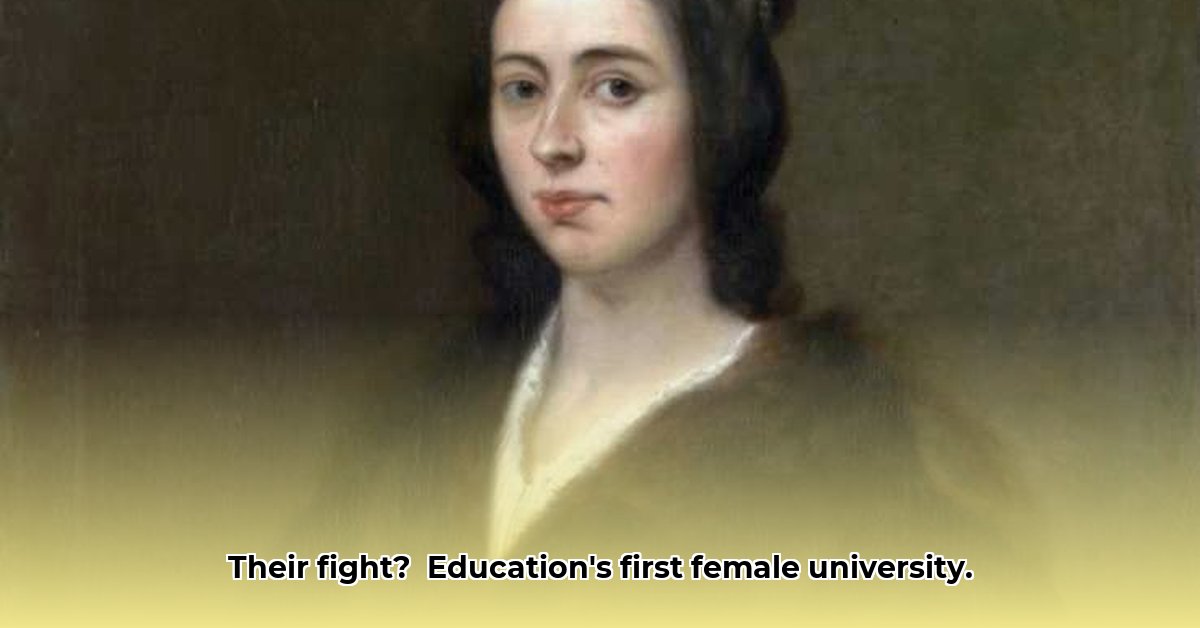
Anna Maria van Schurman, born in 1607, lived in a world where a woman’s education rarely extended beyond domestic skills. Yet, she possessed an insatiable thirst for knowledge, mastering multiple languages and displaying an intellect that far exceeded societal expectations. Her ambition clashed directly with the prevailing limitations placed upon women. This meant that even her pursuit of knowledge was considered radical. In 1636, she audaciously gained access to Utrecht University, although she audited classes rather than formally enrolling. Even this limited participation was a significant act of defiance, demonstrating her unwavering commitment to learning. But this came at the cost of her experience being vastly different from her male peers. She was often segregated and kept apart from the main group, underlining the deep biases of the time.
Fast forward to 1878, and we meet Aletta Jacobs, born in 1854. While societal attitudes had shifted somewhat, the fight for women's educational rights was far from over. Jacobs didn't just attend university; she conquered it. She became the first Dutch woman to earn a medical degree, a monumental achievement in a profession overwhelmingly dominated by men. Her success wasn't merely a personal triumph; it was a powerful statement, a resounding rejection of the systemic barriers women encountered. This achievement wouldn't have been possible without the groundwork laid by those who came before her, showing the gradual influence and building of women's rights into a sustainable system.
But Aletta’s impact went far beyond her personal achievements. She became a vocal advocate for women's suffrage, using her education as a platform for broader societal change. "Aletta Jacobs understood that education wasn't just about personal advancement, but about empowering women to effect widespread change," explains Dr. Elsbeth van der Linden, Professor of Gender Studies at the University of Amsterdam. Her journey represents the transformative power of education, demonstrating its ability to equip individuals to drive positive societal shifts. She proved that a woman could succeed in a male-dominated environment and use their hard-earned knowledge to effect change.
Their stories reveal a fascinating contrast. Anna Maria’s achievement, a crack in a rigid system, paved the way for Aletta’s more complete victory, a wider breach born from decades of ongoing struggle. This represents a fascinating comparison between two generations who both managed to make significant impacts on their society. This incremental progress, however subtle, speaks volumes about the gradual change in attitudes and the shift towards greater gender equality.
The legacies of both women continue to inspire. Their unwavering pursuit of knowledge, their courage in the face of adversity, and their commitment to challenging societal norms provide a powerful message of perseverance, resilience, and the enduring power of education. Their stories serve as beacons, illustrating the importance of fighting for equal opportunities for all, regardless of gender. Their achievements aren't simply historical milestones; they stand as enduring symbols of hope and determination, a reminder that the fight for gender equality is a continuous journey requiring sustained effort. Their story demonstrates the power of perseverance and commitment to the fight for equality.
How did these women's struggles contribute to the fight for women's access to higher education?
- Anna Maria van Schurman: Her audacious act of attending Utrecht University, however limited, demonstrated the possibility of women's access to higher education, breaking the ice for later generations.
- Aletta Jacobs: Her graduation and subsequent advocacy for women’s rights significantly influenced the political climate, paving the way for fuller access and a more inclusive higher education system.
- Together, their contributions highlight the incremental nature of progress, where small victories paved the way for larger, more profound changes.
The lives of Anna Maria van Schurman and Aletta Jacobs serve as a compelling narrative of struggle and triumph in the never-ending fight for gender equality. They remind us that true progress is not a linear path but a testament to the enduring power of human determination and the unwavering pursuit of knowledge. Their stories, filled with nuance and complexity, remain deeply relevant and inspirational today.